Your new post is loading...

|
Scooped by
Sidonie Nkongolo
Today, 4:05 AM
|
Is America no longer the soft-power superpower? How is technology driving this trend? What is lost if people’s cultural habits turn too far inward? Adam Roberts, our foreign editor, and a panel of experts consider these questions and ask what culture’s local turn means for the world.

|
Scooped by
Pierre Itard
June 23, 6:19 AM
|
China's Zhipu releases glm 5.2, an artificial-intelligence model that competes with American systems on capability, cost and openness amid rising tensions. | China
|
|
Scooped by
Pierre Itard
June 18, 3:30 AM
|
Dario Amodei is supported by rival Sam Altman in call for international co-operation
|
|
Scooped by
Pierre Itard
June 16, 5:20 AM
|
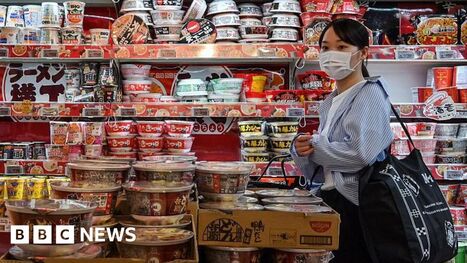
The Bank of Japan has been raising rates from near-zero since 2024.
|
|
Scooped by
Pierre Itard
June 11, 4:28 AM
|
They are doing two things at the time: keeping their oil revenues and investing in renewable energy, making their economies more diverse.
|
|
Scooped by
Pierre Itard
June 9, 4:00 AM
|
Nvidia has announced a series of strategic agreements with major South Korean technology firms, including SK Hynix, SK Telecom, Naver, and Doosan Group, as the company seeks to strengthen its position at the centre of the global artificial intelligence ecosystem.
|
|
Scooped by
Pierre Itard
June 4, 6:44 AM
|
A growing share of economic and technological activity is being justified by narratives of existential risk, particularly around AI, geopolitical conflict, and systemic disruption. These narratives shape investment decisions, corporate strategies, and public debate, encouraging actors to prepare for radical future scenarios rather than incremental change. Capital increasingly flows toward organisations presenting themselves as essential to managing or surviving major disruptions. This dynamic can accelerate innovation and investment, but it also risks amplifying collective anxiety and speculative behaviour. Over time, a society driven by permanent expectations of crisis may face rising political and social tensions.
|
|
Scooped by
Pierre Itard
May 28, 6:00 AM
|
Keir Starmer is expected to sign a defence and security treaty with Poland's Donald Tusk, expanding cooperation on economic resilience, energy security and crime. | Britain
|
|
Scooped by
Pierre Itard
May 22, 9:14 AM
|
The World this week Global political tensions are intensifying, with major developments involving Cuba, Venezuela, Iran, Israel, and Eastern Europe.
Several countries are facing internal unrest, including Bolivia, Kenya, and Peru, driven by economic pressure, elections, and anti-government protests.
International trade and energy security remain central issues, highlighted by new Russia-China agreements and Indonesia’s export controls.
Security crises are worsening through terrorism, drone incidents, and military actions across Africa, the Middle East, and NATO borders.
The text reflects a highly unstable geopolitical environment where economic, diplomatic, and military challenges increasingly overlap.
|
|
Scooped by
Pierre Itard
May 20, 4:59 AM
|
Les Etats-Unis exigent la réouverture sans condition du passage, mais Téhéran met en place un dispositif pérenne de contrôle du trafic maritime et de contournement des sanctions.
|
|
Scooped by
Pierre Itard
May 12, 3:36 AM
|
Le milliardaire de 76 ans purgeait, depuis septembre, une peine d’un an de prison pour corruption. Il porte désormais un bracelet électronique pour les quatre mois restants. Après avoir dominé la scène politique avec sa famille pendant plus de vingt ans, le patriarche laisse planer le doute sur son avenir.
|
|
Scooped by
Pierre Itard
April 30, 4:28 AM
|
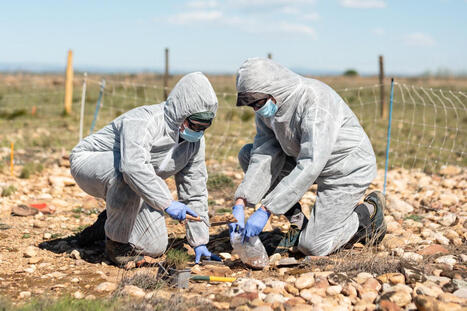
Dans la plaine de la Crau, près d’Arles, une expérimentation est menée pour redonner vie à des sols pollués par les armes. La « braouque », un brachypode au système racinaire très développé, est notamment utilisé pour tenter de stabiliser les métaux lourds présents sous terre.
|
|
Scooped by
Pierre Itard
April 28, 6:27 AM
|
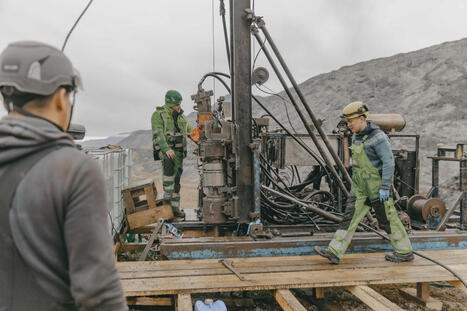
CHRONIQUE. En quelques opérations financières, Critical Metals, une société américaine, a pris le contrôle total, en avril, d’un gisement majeur de terres rares au Groenland. C’est une preuve de plus de la capacité des marchés financiers américains à aimanter le reste du monde, observe Isabelle Chaperon, chroniqueuse au service Economie du « Monde ».
|
|
|
Scooped by
Pierre Itard
June 23, 6:22 AM
|
Recent restrictions on advanced AI models are undermining critical U.S. cybersecurity outcomes. The administration needs a coherent strategy to work with the private sector, stay ahead of adversaries, keep allies on board, and maintain trust in the U.S. AI stack.
|
|
Scooped by
Pierre Itard
June 18, 3:33 AM
|
Even if Trump’s deal holds, Iran retains the ability to close Hormuz again. If the Houthis were to simultaneously disrupt shipping in the Bab al-Mandab Strait, the consequences would be disastrous.
|
|
Scooped by
Pierre Itard
June 16, 5:23 AM
|
Myanmar President Min Aung Hlaing's state visit to China marks one of the most important diplomatic moments for the country's military leadership since the 2021 coup.
|
|
Scooped by
Pierre Itard
June 11, 4:31 AM
|
Global entertainment is fragmenting as audiences embrace local content over American-dominated culture, despite mega-events like the World Cup still drawing worldwide attention. | Leaders
|
|
Scooped by
Pierre Itard
June 9, 4:30 AM
|
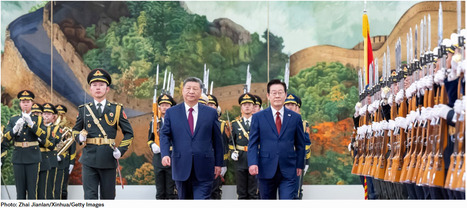
As Xi visits North Korea, South Korea should reassess its China strategy, recognizing a shift from complementarity to competition and Beijing’s unhelpful role on North Korea, and pursue strategic clarity based on a strong U.S.-ROK alliance and trilateral ties with Japan.
|
|
Scooped by
Pierre Itard
June 4, 6:48 AM
|
The rare joint bulletin by the UK, US, Canadian, Australian and New Zealand security services laid out efforts to obtain sensitive information through job ads.
|
|
Scooped by
Pierre Itard
June 2, 7:34 AM
|
L'Indonésie et les États-Unis ont annoncé au mois d’avril la signature d'un partenariat de défense « majeur ». Alors que l'Indonésie cherche à moderniser son équipement militaire et à consolider sa place sur la scène internationale, les États-Unis voient en ce pays un partenaire essentiel dans l'Indo-Pacifique, à la fois pour sa posture diplomatique, ses ressources fossiles, et son emplacement stratégique sur le détroit de Malacca.
|
|
Scooped by
Pierre Itard
May 28, 4:10 AM
|
Branded as multilateral, the Board of Peace risks hollowing out multilateral legitimacy by centralising power and sidelining existing institutions. Gaza is its first test. For the EU, being ‘inside the room’ may mean influence without authority; real leverage will come from political will, not Board membership.
|
|
Scooped by
Pierre Itard
May 22, 9:11 AM
|
Une analyse satellite réalisée par « Le Monde » montre que dans la zone frontalière occupée par l’armée de l’Etat hébreu, les villes et les villages ont été rasés ou endommagées à hauteur de 45 %. Cette entreprise de destruction, qu’Israël justifie par des arguments sécuritaires, est qualifiée de crime de guerre par les experts en droit international.
|
|
Scooped by
Pierre Itard
May 20, 4:56 AM
|
Constituée de cinquante-quatre États, berceau de nombreuses civilisations, l’Afrique représente à elle seule un continent-monde de plus d’un milliard d’habitants. Trop souvent considérée comme un tout homogène, elle devrait plutôt être pensée dans sa diversité et sa profondeur.
Sur le plan géopolitique, on la croit marginalisée. Ses acteurs sont souvent perçus comme passifs et dépendants du reste de la communauté internationale. Or, c’est une tout autre représentation que propose Sonia Le Gouriellec dans cet ouvrage. Celle, au contraire, d’un continent ouvert sur le monde, ayant depuis toujours participé aux échanges et aux équilibres politiques, commerciaux et intellectuels, et qui est aujourd’hui intégré à la mondialisation et aux dynamiques contemporaines, au point d’apparaître comme un nouveau centre névralgique des défis de notre époque.
S’appuyant sur de nombreuses études de cas, Sonia Le Gouriellec n’écrit rien de moins qu’une géopolitique des Afriques.
|
|
Scooped by
Sidonie Nkongolo
May 12, 3:27 AM
|
The closure of the Strait of Hormuz has taken about a seventh of the world’s oil supply offline for two months. The oil price is only just beginning to reflect the consequences. On Wednesday the price of a barrel of Brent crude shot up to around $120, having ended last week not much above $100. It probably has further to rise. Before the war, analysts forecast a price of $150-200 in a scenario where the strait remained closed for months. How high will the oil price go?
|
|
Scooped by
Pierre Itard
April 30, 3:26 AM
|
|